
How a nine-day delay changed Daro’s recovery forever.
Over the past few weeks, we have been sharing updates about our Trauma and Critical Care Centre (TCCC) and the launch of its first-ever Trauma and Critical Care Awareness Day. Today, we want to show why the Centre’s work beyond the hospital is so important by sharing the story of a young boy whose delayed treatment nearly resulted in permanent disability.
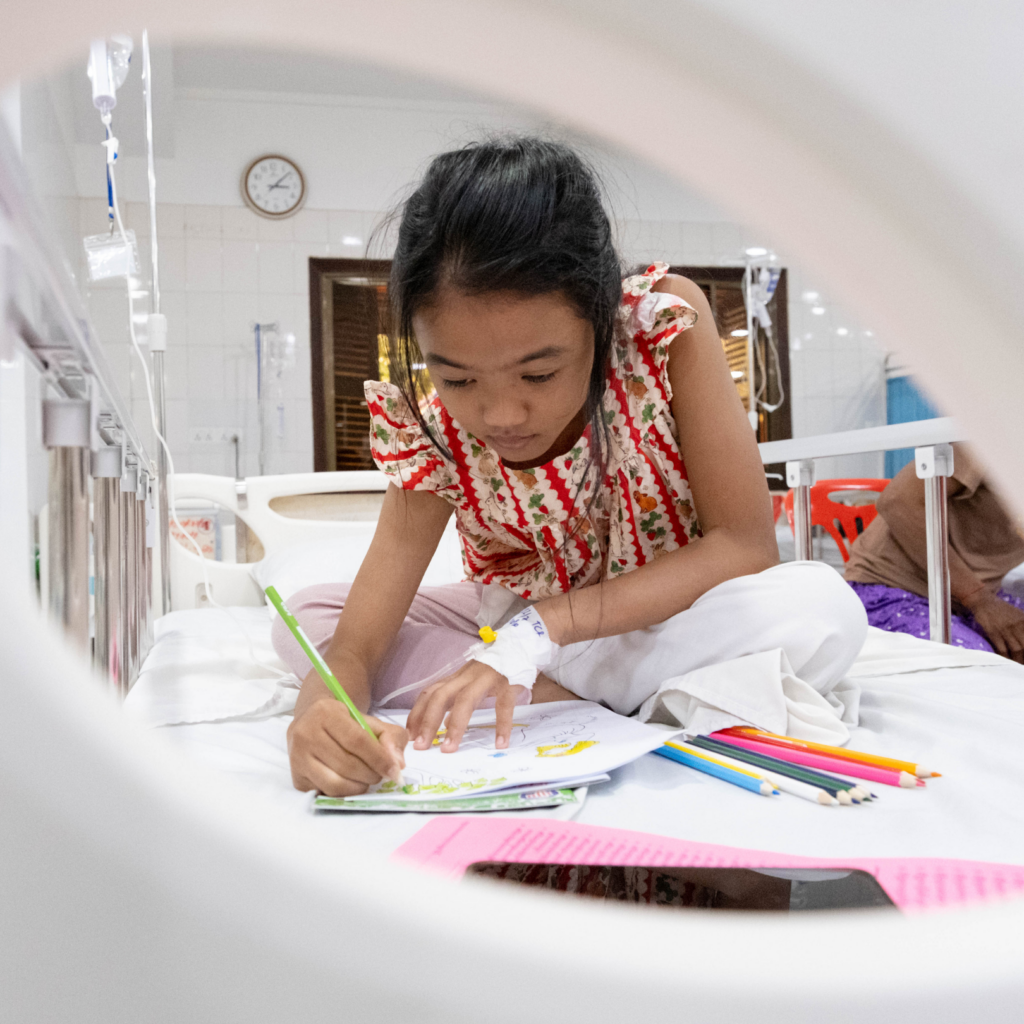
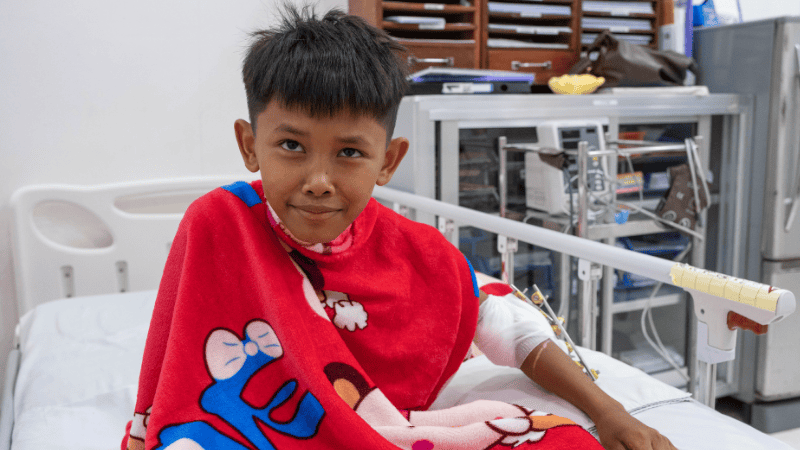
Eleven-year-old Daro is full of energy. Like many boys his age, he loves running, climbing and playing with his friends. One afternoon, while playing on a swing at his local playground, he fell awkwardly and injured his left elbow.
Believing the injury was not serious and following traditional practices, Daro’s family took him to a traditional healer. His arm was wrapped in medicinal herbs, where it remained for nine days before he was finally brought to Angkor Hospital for Children (AHC).
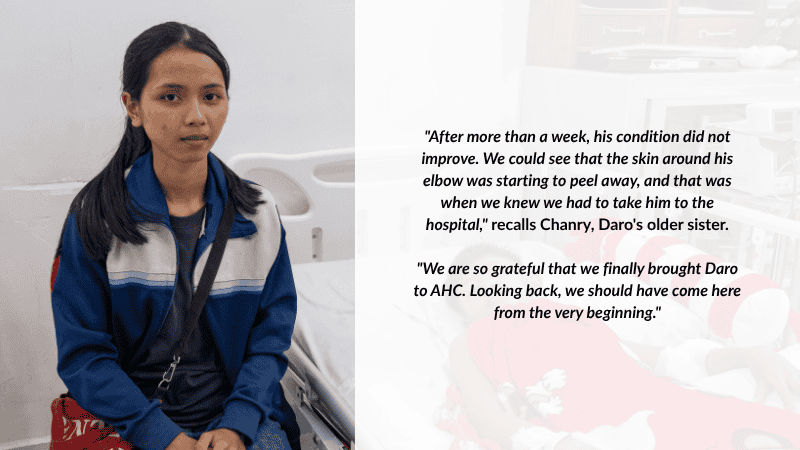
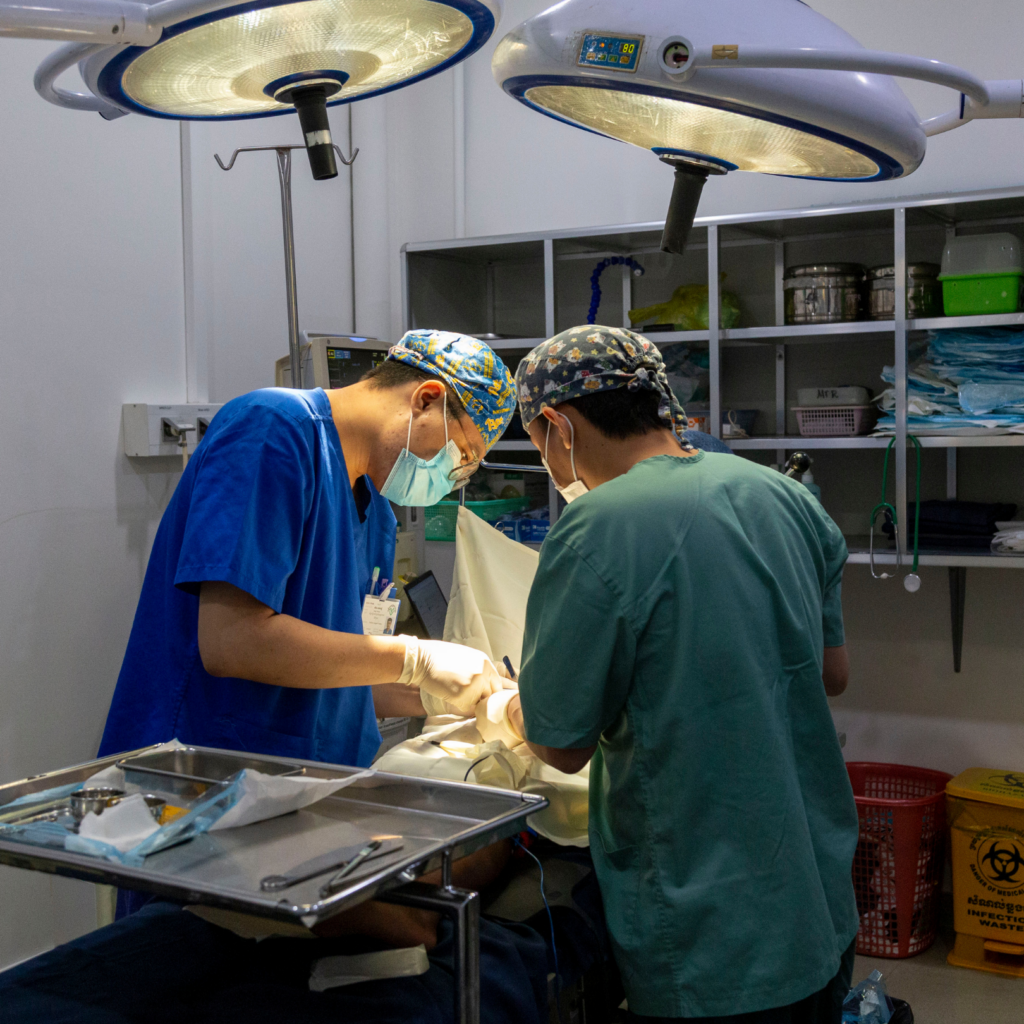
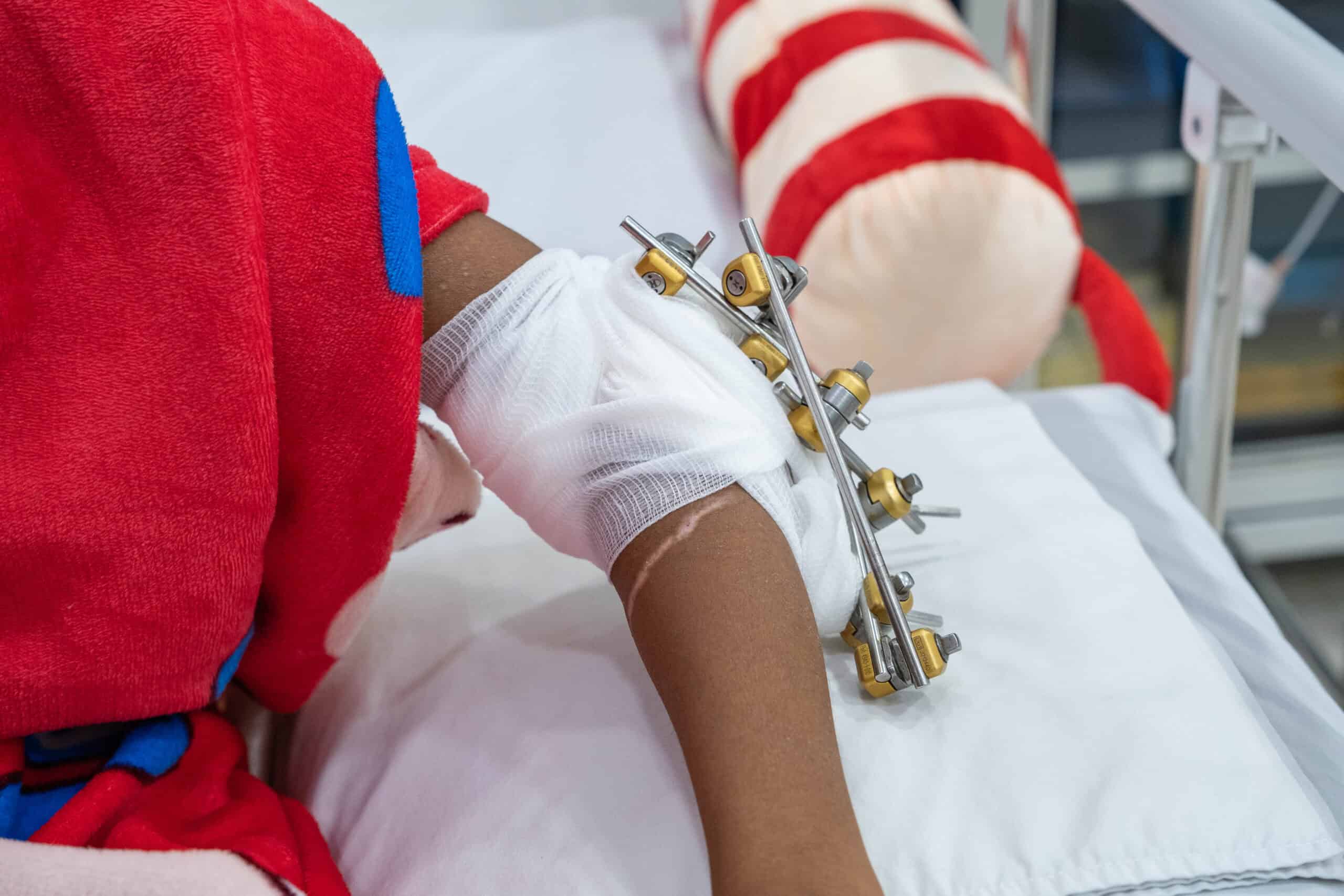
When Daro arrived at our Trauma and Critical Care Centre, his condition was severe. His left elbow was badly swollen and infected. He could no longer bend his arm, and part of the lower end of his upper arm bone (the distal humerus) was exposed through the wound. X-rays confirmed a complex elbow dislocation. Because of the delay, it was no longer possible to reposition the joint without surgery.
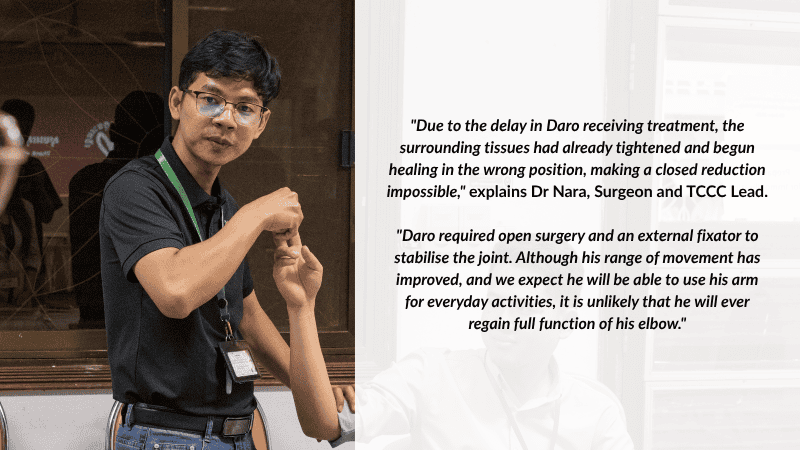
Daro’s story reflects a challenge that continues to affect many families across Cambodia. Delays in seeking medical care are often caused by limited health knowledge, financial pressures, long travel distances, or deeply rooted beliefs in traditional medicine.
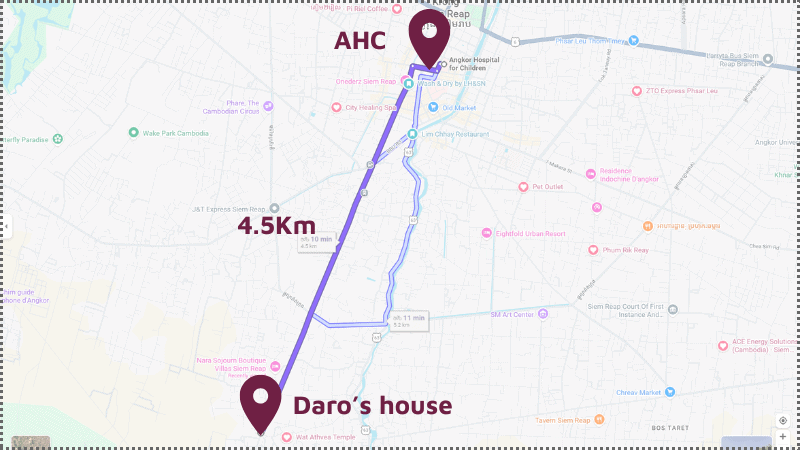
What makes Daro’s case particularly striking is that his family lives on Psar Kraum Road, just 3 km from Siem Reap town and around 4 km from AHC. His story shows that delayed treatment is not only a rural issue. Even families living close to specialised healthcare can lack the knowledge to recognise a serious injury and seek urgent medical attention.
Sadly, cases like Daro’s are more common than many people realise. Injuries that could often be treated successfully if addressed immediately can become far more serious when treatment is delayed, requiring more complex surgery, longer recovery times and, in some cases, leaving children with lifelong disabilities.
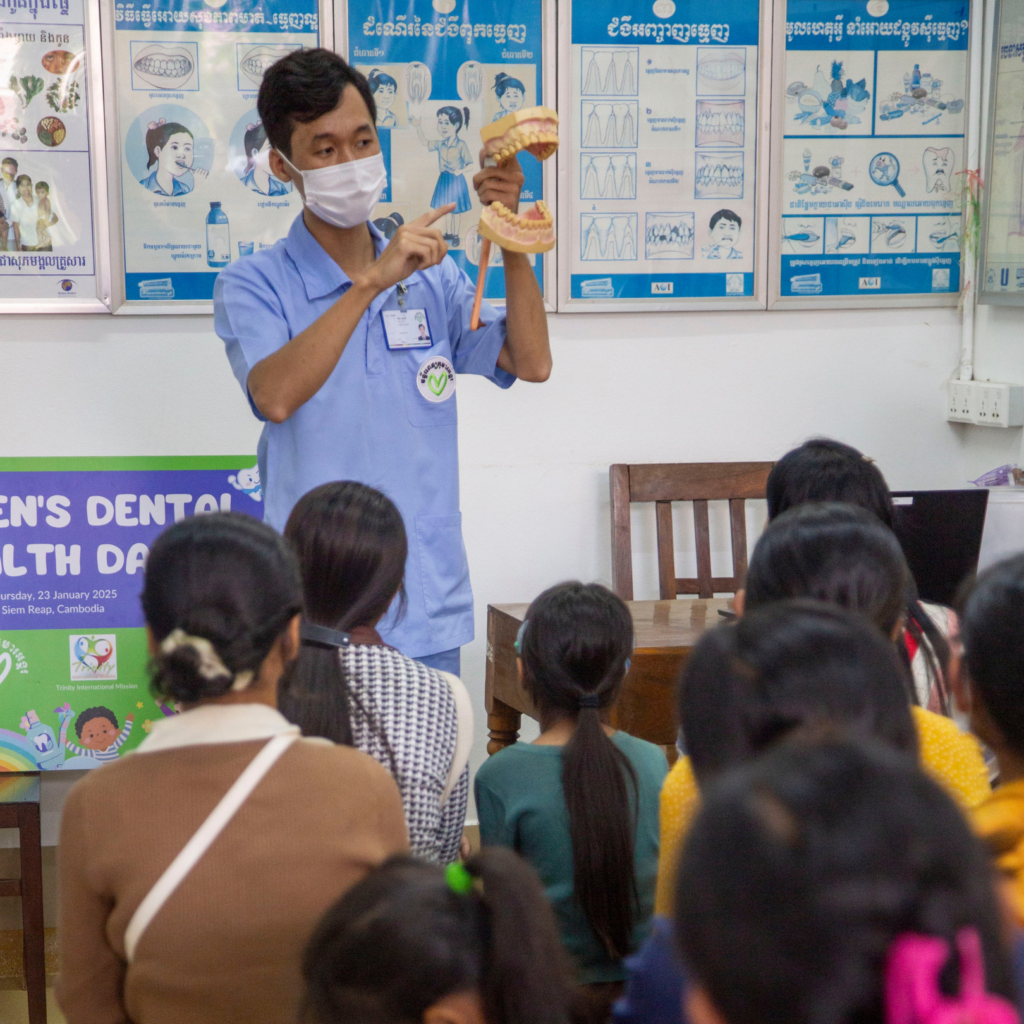
This is why our Trauma and Critical Care Awareness Day is so important. By educating parents, teachers, caregivers and communities about recognising serious injuries and knowing when to seek urgent medical care, we can help ensure that more children receive the right treatment at the right time, giving them the best possible chance of making a full recovery.
Together, we can help prevent stories like Daro’s from becoming another child’s future.